De-addiction Therapy
You don't have to be sure to begin. Being curious is enough.
Many people come to me unsure whether they have a problem, unsure they want to stop, or sent by someone else. That is a normal place to start. In de-addiction therapy we look at your drinking, tobacco or drug use plainly, without judgement, work out what it does for you and what it costs you, and decide together what, if anything, you want to change.
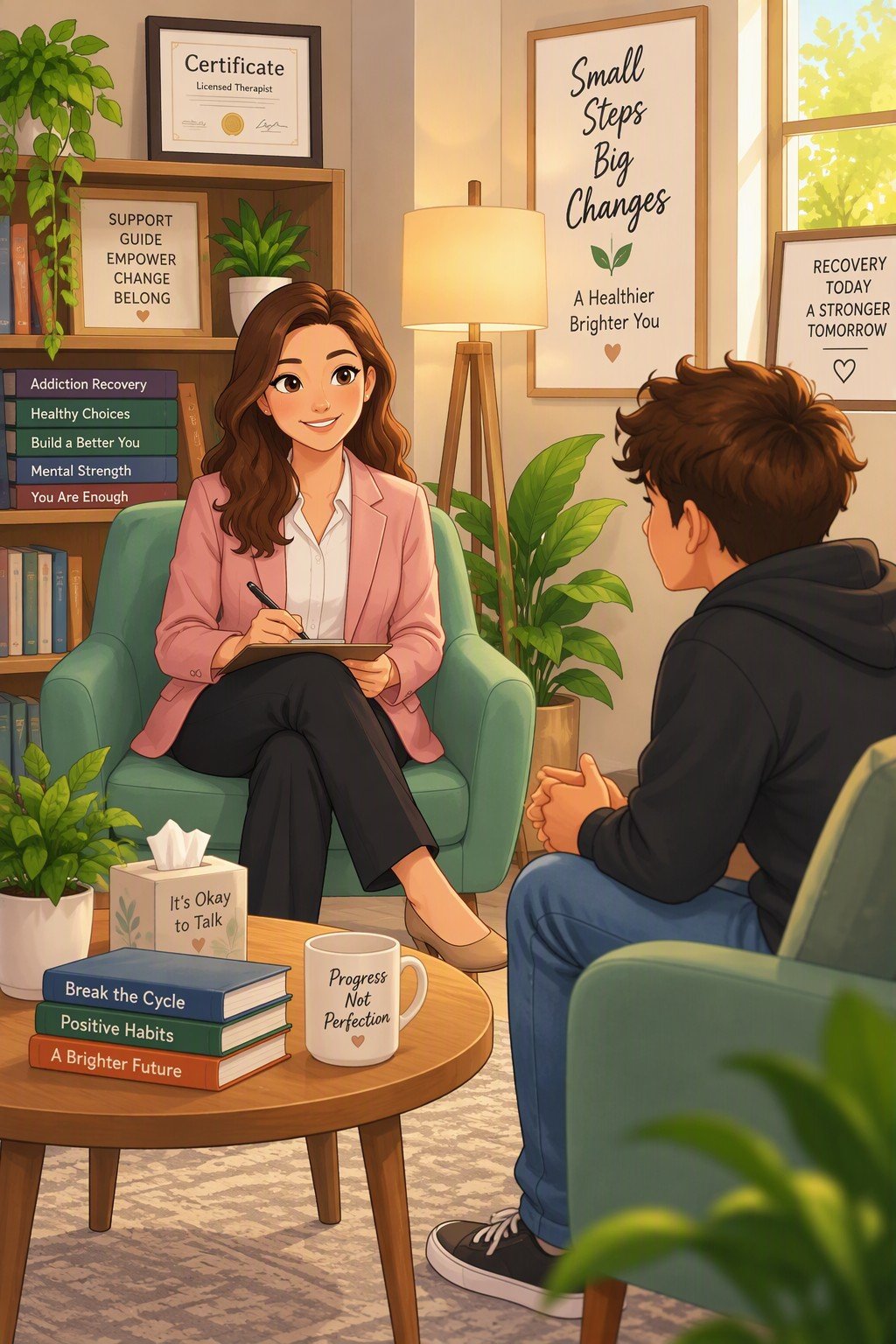
What is de-addiction therapy?
It is therapy for people whose use of alcohol, tobacco, drugs or medicines has started to cost them something: health, money, work, sleep, a relationship, or their own respect. It is not a lecture, and it is not about willpower. Most people already know the arguments for stopping. What helps is working out your own reasons, your own pace, and a plan that fits your life.
It is also not detox. If your body has become dependent, stopping suddenly can be unsafe, and that part is medical. I'll tell you plainly when you need a doctor, and I work alongside one.
Who it helps
You may come for yourself, because someone asked you to, or because you're worried about a person you love. I see people who are:
- Drinking more than they mean to, or more than is good for them
- Smoking or chewing tobacco: cigarettes, bidis, khaini, gutka, snuff
- Using drugs: cannabis, opioids, sedatives or others
- Taking prescription medicines in ways or amounts they weren't meant to
- Struggling with a habit that has taken over, such as gaming, gambling or pornography
- Family members who want to understand and cope, with or without the person who is using
How you know it may be time to talk to someone
There is no single sign, and you don't have to tick every box. These are the ones people most often tell me about:
- You use more, or for longer, than you planned
- You've tried to cut down or stop, and it hasn't lasted
- You need more than before to feel the same, or you feel unwell, shaky or irritable when you don't use
- A lot of your time goes into getting, using or recovering from it
- You've missed work, study or family time, or lied about how much you use
- You keep using even though it's hurting your health or a relationship
- People close to you have raised it, more than once
Where the questionnaires fit
Questionnaires give us a shared starting point, not a verdict. Depending on what you use, I may ask you to fill in the AUDIT (alcohol), the DAST-10 (drugs other than alcohol), a tobacco dependence questionnaire, or a broad 23-question check across mood, anxiety, sleep and substance use. You fill them in privately and we go through them together. They are screening aids, and no score decides anything on its own. You can read more on the Alcohol Assessment and Nicotine Assessment pages.
How it goes
We talk
You tell me what's going on in your own words, and what brought you here. I'm not looking for a confession. I'm trying to understand what the habit does for you, and what it costs.
We measure
You fill in one or two questionnaires at home. If you use more than one substance, we look at each.
You see your results
We go through your answers together. People are often surprised by one part of the picture, in either direction.
You decide what you want
Cutting down, stopping, staying as you are for now, or just thinking about it. All are fine places to be. I'll tell you what I think, and then the choice is yours.
We make a plan
Specific and small: what to change this week, what will make it hard, what to do when it gets hard, who can help. For some people, this includes a doctor or a de-addiction centre.
We check in
We look at what worked and what didn't. A slip is information, not failure. We learn from it and adjust the plan.
If your body may be dependent: please read this
If you drink heavily every day, or use sedatives or sleeping pills or opioids daily, do not stop suddenly on your own. Stopping alcohol or sedatives abruptly can cause seizures, confusion and other serious problems. This needs a doctor, and sometimes a hospital or de-addiction centre. Come and talk to me, and I'll help you find the right medical support.
If someone is having a seizure, is confused, hallucinating, or has trouble breathing after using or stopping, call 112 or go to the nearest hospital emergency department now.
Frequently asked questions
Do I have to want to stop to come?
No. Many people come unsure, or only to cut down. We start from where you are.
I don't think I have a problem. My family does.
That's common, and you're welcome. I won't try to convince you. We can look at what your use does for you and what it costs, and you decide whether any of it matters to you.
Do I have to stop before I come?
No. Please don't come while intoxicated, because we won't be able to do much useful work. Otherwise, come as you are.
Will you tell my family or employer?
No. What you tell me is confidential, with the limits any psychologist works within, which I'll explain in our first session. I only involve your family if you want me to.
Will I need medication?
Not always. If your body has become dependent, or you have another condition that needs treating, I'll refer you to a psychiatrist or doctor. I'm a psychologist and don't prescribe.
What if I slip?
Slips are common, and they don't undo what you've done. Come back and tell me. A slip shows what to plan for next time.
How many sessions will I need?
It varies. Some people find one or two conversations enough. Others work with me over a few months. We review after each session, and there's no pressure to continue.
Can my family come, or come without me?
Yes. Family members can come on their own to understand what's happening and look after themselves, even if the person using doesn't want to come.
Helplines (India)
If you'd like to talk to someone right now, or you're unsure about booking a session, these are free to call.
| Helpline | Number | What it offers |
|---|---|---|
| Tele MANAS (Govt. of India) | 14416 | Free mental health counselling, 24 hours, across India. |
| De-addiction helpline (Ministry of Social Justice and Empowerment) | 14446 | Toll-free. Primary counselling and referral for people seeking help with drug and alcohol use. |
| National Tobacco Quitline | 1800-11-2356 | Toll-free counselling to quit tobacco. English, Hindi, Kannada, Tamil, Telugu and Malayalam. Run from NIMHANS. |
| Emergency | 112 | Police, ambulance and fire. For seizures, overdose, severe confusion, or someone in danger. |